
Revenue Optimization: Why Marketing Activity Is Not Revenue
Most marketing systems optimize for traffic, clicks, and leads instead of revenue. Learn why revenue-driven optimization and feedback loops outperform activity-based marketing.
Why Modern Marketing Optimizes the Wrong Things
Marketing activity vs revenue is the core disconnect behind flat sales. Most marketing optimization solves the wrong problem.
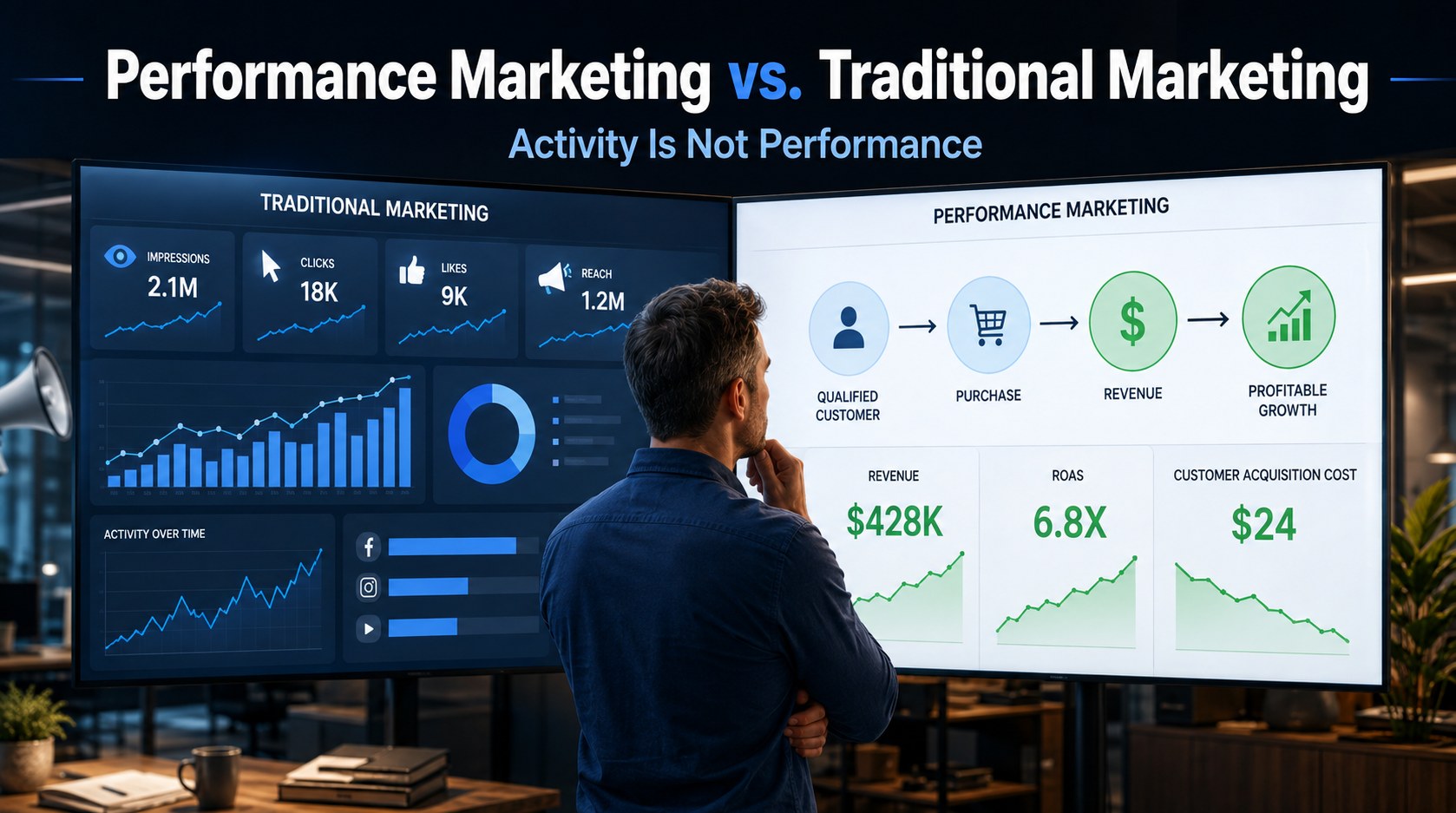
Traffic is up. CTR is improving. CPC is down. The dashboard looks healthy.
And revenue is flat.
The problem isn’t that the marketing is bad. The problem is what the marketing has been optimized to produce — a textbook marketing activity vs revenue mismatch.
Activity Is Not Revenue
In most companies, “optimization” means more traffic, lower CPC, higher CTR, more leads. These metrics measure what marketing is doing. None of them measure what it is producing.
A campaign that doubles traffic and halves cost per click is, by every dashboard in marketing, a success. If those 500 leads never close, it is a revenue failure dressed as a marketing win.
That gap — the marketing activity vs revenue gap between activity that looks good and revenue that doesn’t move — is the one modern marketing has been ignoring.
What Revenue-Driven Optimization Actually Is
Revenue-driven optimization grades marketing by closed deals, qualified buyers, conversion efficiency, and customer lifetime value — not clicks, traffic, or lead volume.
A system optimized for activity gets better at generating marketing metrics. A system optimized for revenue gets better at generating customers. That difference is the entire marketing activity vs revenue debate in one sentence.
The Missing Piece: Feedback Loops
A dashboard tells you what happened. A feedback loop changes what happens next. Without one, the marketing activity vs revenue gap just keeps repeating quarter after quarter.
To optimize for revenue, the system has to know which leads closed, which channels produced the closers, and which conversations moved deals forward — and feed that back into acquisition so it does more of what worked.
That requires attribution, CRM integration, and call tracking connected end-to-end. Most companies haven’t built that plumbing. Their marketing can only learn from its own activity.
Activity is the wrong teacher.
Why Most Companies Stop Here
Two reasons.
Activity metrics are easier to measure. Real-time, accessible, no integration required.
And activity metrics are safer to defend. “CPC is down 30%” sounds like marketing performance. “Revenue per closed-won lead is up 8%” sounds like a metric the CFO might start owning.
Activity optimization protects the marketing function. Revenue optimization exposes it.
Both are short-term comfort and long-term cost. Companies that keep optimizing activity keep wondering why their best-performing campaigns produce their worst-performing pipelines. That is the marketing activity vs revenue trap in its purest form.
What It Looks Like in Practice
A revenue-driven system does not ask: “Did the campaign produce leads?” It asks: “Did the campaign produce buyers?”
It does not ask: “Did the audience click?” It asks: “Did the audience close?”
It does not ask: “Did the form convert?” It asks: “Did the people who filled it out become customers worth keeping?”
Each question sounds obvious. Almost no marketing system is structured to answer them. This is exactly what the marketing activity vs revenue distinction looks like in practice.
The Category Opportunity
The next decade of marketing will not be won on better creative, lower CPC, or larger audiences.
It will be won on revenue feedback loops — systems that get smarter every quarter because every closed deal teaches them something the dashboards never would.
Closing the marketing activity vs revenue gap for good is what that shift requires.
Final Thought
The right question about marketing activity vs revenue for any marketing investment isn’t “Is the activity improving?”
It is “Is the revenue improving — and does the system know why?”
A program that cannot answer the second isn’t optimizing. It is measuring itself.
The companies that win this category will be the ones graded by what they make the business close, not by what they make the business spend.
FAQ
Recent Posts


Ready to See Which Marketing Produces Customers?
Request a complimentary Revenue System Performance Assessment.
We’ll:
- Walk through how you’re currently attracting leads
- Highlight common gaps that impact conversion
- Give you the next step that will improve results fastest
No pitch. No pressure. Just clarity.