
National Brand Support Opens the Door. Local Strategy Wins the Customer.
National brand marketing can create awareness, but local businesses still need a strategy to turn that awareness into visits, calls, appointments, reservations, quotes, sales, and revenue.
Because national marketing can create awareness — but local businesses still need to give customers a reason to choose them.
A clear local marketing strategy is what turns that partnership into paying customers. Many local businesses benefit from strong national brand partnerships.
A national brand can provide name recognition, professional creative, seasonal promotions, co-op funds, advertising support, product education, and credibility that a local business could not build on its own.
But there is a trap.
Local businesses can start to believe the national brand has marketing handled.
It usually does not.
The national brand may help people recognize the name, product, or category. But the local business still has to make people choose its location, team, store, showroom, restaurant, practice, dealership, or service.
That is the difference.
National marketing can create awareness. Local marketing turns that awareness into visits, calls, appointments, reservations, quote requests, sales, revenue, and customers. Building that bridge deliberately is the whole job of a local marketing strategy.
Brand Support Is Not the Same as a Local Marketing Strategy
National brands support many locations at once — franchise stores, dealers, distributors, retailers, restaurants, practices, showrooms, and local service providers across different markets.
That is why their marketing is broad by design.
It has to work across different customer types, competitors, locations, and local conditions.
That does not make national marketing bad.
It makes it incomplete.
A national campaign may promote the brand, product, offer, or category. But it is rarely built around your local competitors, reviews, response time, staff, inventory, showroom, service experience, or community reputation.
The brand may be doing its job.
But that does not mean your local market is handled. Closing that gap is exactly what a local marketing strategy does.
Local Customers Still Choose Locally
A customer may recognize the national brand, trust the product, and already know they want a certain product, service, or experience.
But that does not mean they will buy it from you.
When it is time to call, visit, schedule, reserve, or make a purchase, they still make a local decision.
Why this location?
Why this store?
Why this provider?
That decision is shaped by local signals: reviews, proximity, search visibility, website quality, photos, availability, speed of response, and community presence.
National marketing may help customers decide what they want.
A local marketing strategy helps them decide who to buy it from.
That is the critical moment — after the customer is interested, but before they choose.
A strong local presence helps the business show up at exactly that moment, when nearby customers are searching, comparing reviews, checking websites, browsing photos, or deciding where to go next.
That is where local businesses often lose the customer — not because the brand is weak, but because the local path from awareness to customer is not clear enough, strong enough, or measured well enough.
A Local Marketing Strategy Is More Than Placing Local Ads
Local marketing does not mean placing ads on neighborhood platforms and hoping something happens.
Those channels can be useful. But the channel is not the strategy.
An ad can put your business in front of people. That does not mean it reached the right people, at the right time, with the right message, or gave them a strong enough reason to choose you.
A nearby customer may see the ad and still check reviews, search maps, compare photos, or visit a competitor’s website. If those pieces are weak, the ad may create interest for someone else to capture.
Getting that filtering right is the actual work of a local marketing strategy.
A strong local strategy connects the whole path — who is ready to buy, where they are searching, what they need to see before choosing, and whether that activity turned into a visit, call, appointment, or sale.
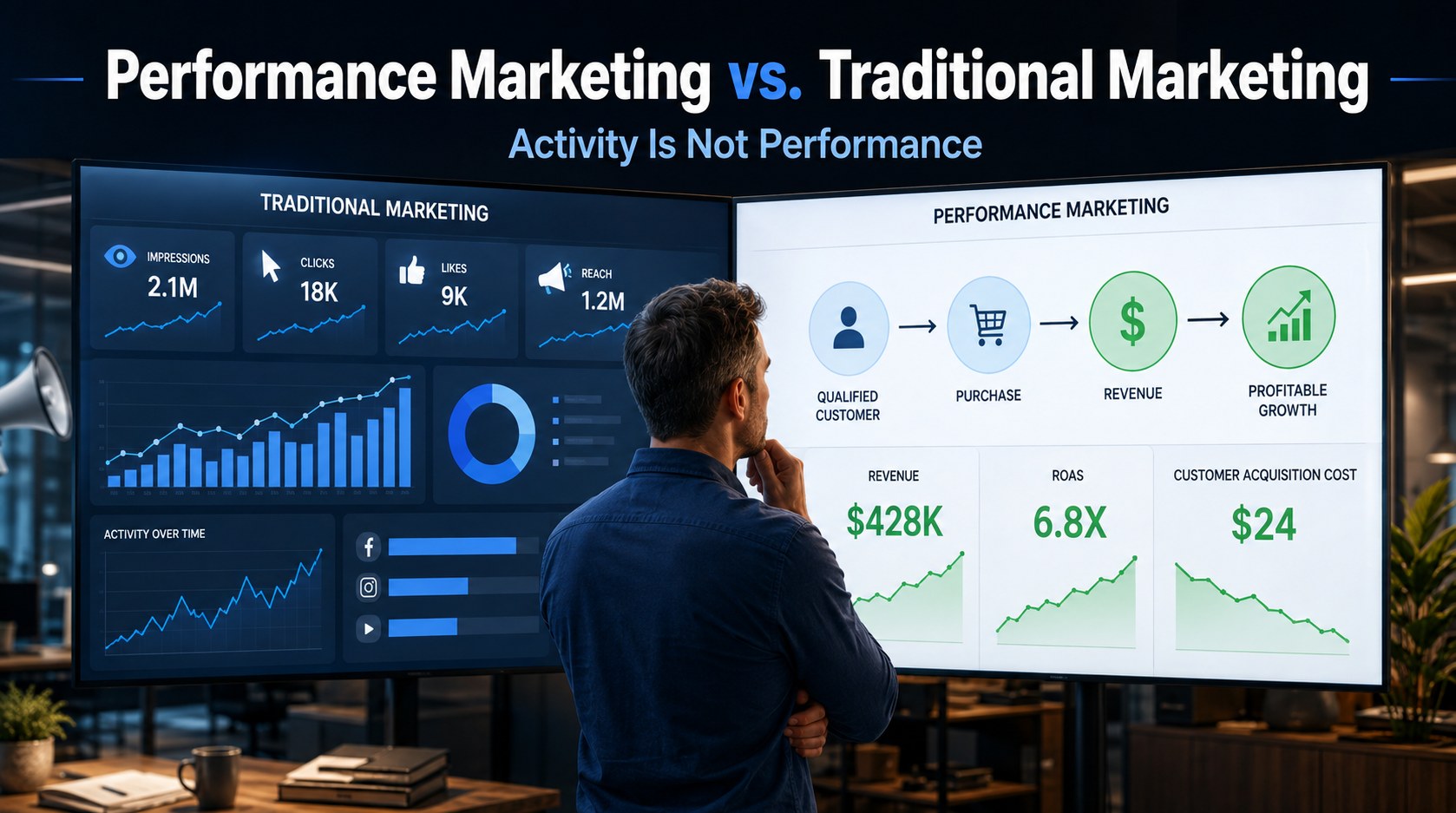
Posting an ad is activity.
Connecting local demand to local revenue is what a local marketing strategy does.
The National Brand Owns the Brand. You Own the Customer Relationship.
National support may create interest.
But the local business owns what happens next.
The visit. The call. The reservation. The appointment. The sale. The service experience. The review. The repeat customer. The referral.
That is where local marketing has to do its job.
If a national campaign creates interest but your local business does not show up well online, the opportunity can go to a competitor.
If the website is slow, generic, or confusing, the customer may never visit, call, or request a quote.
If the customer cannot quickly see why your location is the right choice, they may choose another local option.
If nobody tracks where the customer came from, the owner may never know what worked.
National support can open the door.
Local strategy wins the customer.
Each of those failure points is exactly what a deliberate local marketing strategy is designed to close.
Co-Op Dollars Can Still Be Wasted
Many local businesses receive marketing funds, co-op support, approved creative, or campaign options from national brands and product partners.
That can help.
But just because the brand helps fund something does not mean it is the right investment for your local market.
The wrong question is:
Is this campaign approved by the brand?
The better question is:
Did this campaign produce local customers?
That question, asked consistently, is the foundation of any serious local marketing strategy.
A co-op campaign can look good on paper and still miss the mark. If nobody can measure whether it created visits, calls, reservations, appointments, quote requests, sales, or revenue, the business is still guessing — even when the marketing was subsidized.
Reviewing how that support is actually spent is a routine part of a healthy local marketing strategy.
What a Strong Local Strategy Does
A strong local strategy connects brand awareness to the local results that actually matter — visits, calls, booked appointments, and revenue — not just impressions and activity.
It helps the business show up in local search, build stronger reviews, improve location pages, highlight local inventory or offers, improve the website, and track what actually produced revenue.
The goal is not more marketing activity.
The goal is to connect the dots.
Who visited? Who called? Who booked? Who bought? Which campaign caused it? What should change next?
When a local business can answer those questions, marketing stops being a cost and starts being a tool for making better decisions. That decision-making shift is the real output of a working local marketing strategy.
When Multiple Businesses Sell the Same Brand, a Local Marketing Strategy Is the Differentiator
If several dealers, retailers, restaurants, franchise locations, or providers in your area are connected to the same national brand, the national campaign does not choose between them.
The customer does.
Better reviews, stronger local proof, more helpful staff, clearer inventory, a better showroom, or a stronger service experience can tip the decision.
National marketing gives customers a reason to consider the brand.
Local strategy gives them a reason to choose you. Winning that comparison, over and over, is the job of a local marketing strategy.
What Changes When You Know What Works
When a local business knows which marketing is producing customers, everything becomes clearer.
You can put more money into what works and stop spending on what does not.
You can find out whether the problem is the marketing, the website, the phone call, the reservation process, the showroom experience, or the follow-up.
You can promote higher-value products, services, or customer segments and support the locations or teams that need more demand.
You can make budget decisions based on results — not habit, hope, or pressure.
Spend more here. Stop spending there. Fix the local page. Build the reviews. Improve the follow-up. Promote the higher-value offer. Win the better customer.
That is what happens when local marketing is measured.
It becomes a tool for running the business better.
National Support Opens the Door. Local Strategy Wins the Customer.
Local businesses should value what national brands provide.
But they should not confuse that support with a complete local growth plan.
SmartXperiences helps local businesses connect national brand support with local marketing that produces measurable outcomes — visits, calls, appointments, reservations, quote requests, sales, and revenue — so owners can see what is working, fix what is missing, and invest with confidence.
Because the goal is not more marketing activity.
The goal is a clear answer to one question:
Which marketing actually produced the customer?
When a local business can answer that, it is no longer relying on national support alone.
It is building its own local growth system.
Recent Posts


Ready to See Which Marketing Produces Customers?
Request a complimentary Revenue System Performance Assessment.
We’ll:
- Walk through how you’re currently attracting leads
- Highlight common gaps that impact conversion
- Give you the next step that will improve results fastest
No pitch. No pressure. Just clarity.