
Remodeling Leads: The Design-Build Problem Nobody Talks About
Design-Build Marketing: Why More Leads Are Not the Goal SmartXperiences Most design-build companies are not losing money because the phone is not ringing. They are losing money because too many of the wrong people are ringing it. Homeowners with no realistic budget. Small-job inquiries that do not fit the business model. Prospects looking for free ideas. People outside the ideal service area. Leads that look good in a report but never had a serious chance of becoming profitable projects.
That is the trap.
Most marketing programs celebrate lead volume before asking whether those leads are worth your team’s time.
For a design-build company, that is dangerous. Good design-build marketing filters out that risk before it ever reaches your sales team.
A bad lead does not just waste ad spend. It wastes sales time, design time, estimating time, follow-up time, and owner attention.
A small patio inquiry and a six-figure outdoor living project may both count as “leads” in a dashboard.
But they are not remotely equal to the business.
That is the entire point of treating design-build marketing as a filtering system, not a volume machine.
Lead Volume Is the Wrong Scoreboard
Generic marketing asks: “How do we get more leads?”
Smarter design-build marketing asks: “How do we attract the right projects and filter out poor-fit prospects before they waste our time?”
That is the difference between a sales team buried in weak conversations and one focused on homeowners who are ready to invest.
The right prospect understands the value of professional design, has a realistic budget, lives in a service area worth serving, and is considering the type of project your company actually wants more of.
Your marketing should not be built to attract every possible inquiry. It should be built to attract the right ones.
Bad Leads Are More Expensive Than They Look
A weak lead rarely looks expensive at first.
It starts as a form submission or phone call. Then someone follows up. Then there is a conversation. Maybe a site visit. Maybe rough pricing. Maybe another follow-up.
Then silence.
By the time your team realizes the prospect was never a fit, the damage is already done.
Sales gets frustrated because marketing is sending weak opportunities. Marketing points to lead volume and says the campaigns are working. The owner is stuck trying to figure out what is actually true.
Meanwhile, the pipeline looks active but does not convert into enough profitable work.
A full pipeline does not matter if it is full of the wrong people.
This is exactly the failure mode that disciplined design-build marketing is built to prevent.
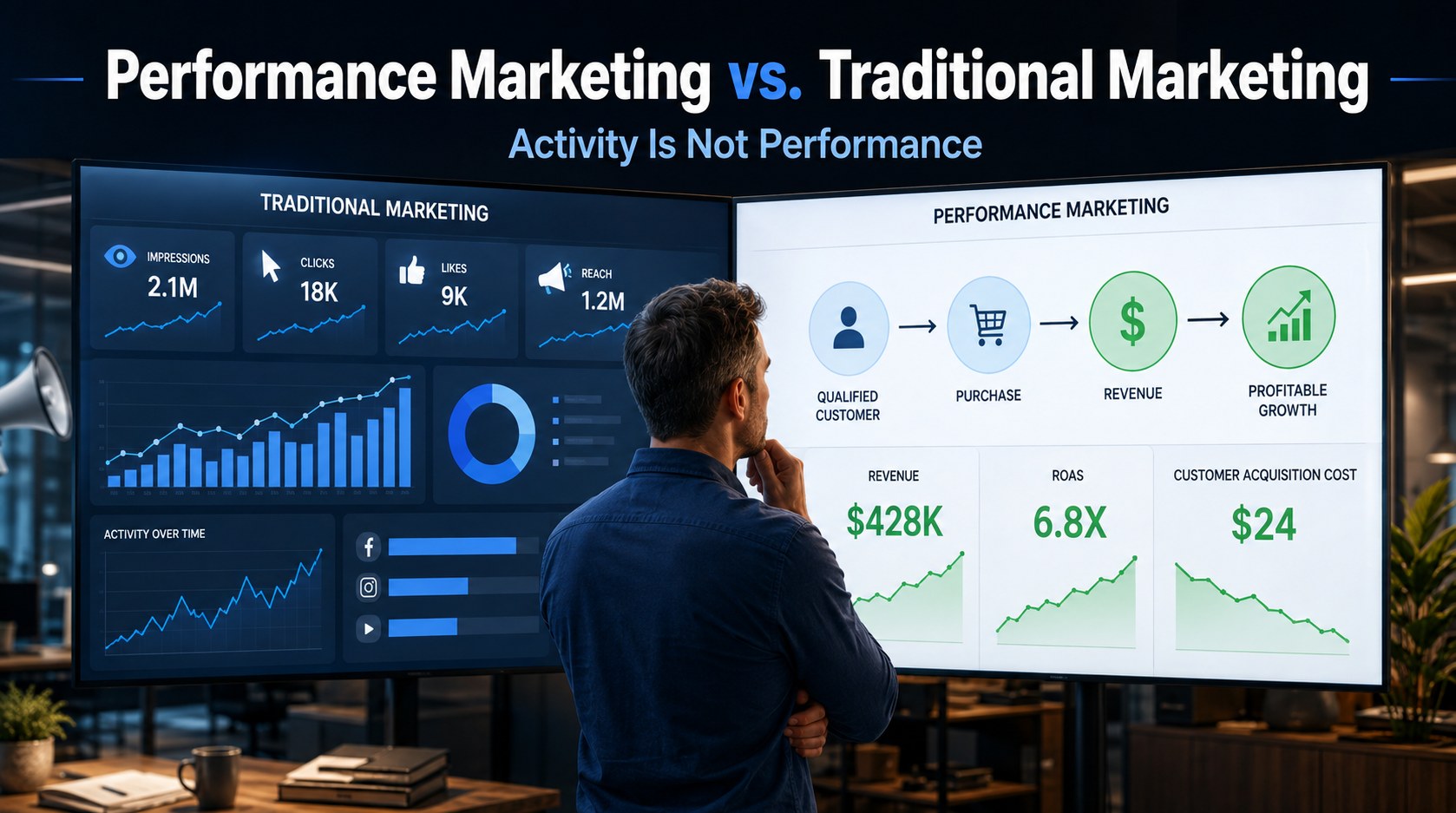
Standard Marketing Reports Are Built to Show Activity, Not Results
A standard marketing report may show clicks, impressions, traffic, calls, form fills, cost per lead, search rankings, and social engagement.
Those numbers are not useless.
They are just incomplete.
They do not tell you whether the campaign produced serious consultations. They do not tell you whether leads fit your project minimums. They do not tell you whether those leads became design agreements, proposals, sold projects, or revenue.
That gap is where bad decisions happen.
You may keep funding a campaign because it produces cheap leads, even though those leads rarely become profitable projects. You may cut a campaign because the cost per lead looks high, even though it produces better opportunities.
Worse, the data itself may be wrong.
Spam submissions, bot traffic, misattributed calls, and low-intent visitors can all register as conversions in a poorly structured system. When that happens, the owner is not looking at performance. They are looking at noise.
In a recent client engagement, a premium outdoor living design-build company rebuilt its tracking, filtering, attribution, and campaign structure from the ground up. Spam and bot activity dropped by approximately 85-90%. Total website users increased by more than 200%. Appointment-quality conversions doubled during the early stabilization period.
The lesson is direct: bad data produces bad decisions. Cleaning the system changes everything, and it is usually the single highest-leverage fix available to design-build marketing that has been running on guesswork.
Your Website Should Qualify Prospects, Not Just Impress Them
Many design-build websites look good but do not work hard enough.
Beautiful project photos matter. They build credibility and show taste, quality, and capability.
But photos alone do not qualify a prospect. This is where design-build marketing on your website has to do more work.
A strong website communicates what you specialize in, where you work, what your process looks like, what level of project you are best suited for, what happens after someone contacts you, and why your company is worth trusting with a significant investment.
If your website makes you look like a general contractor competing for every small job, it will attract small-job inquiries. If your website hides your process, it will attract people who are not prepared for a professional one. If your website does not communicate the level of work you do, it will attract misaligned prospects.
A strong website does more than generate leads. It pre-sells the right prospects and quietly filters out the wrong ones.
Getting that page right is one of the highest-leverage moves in design-build marketing today.
Show the Proof That Matches the Projects You Want
Most design-build companies have completed projects, photos, reviews, and happy clients. The problem is that the proof is often underused or poorly organized.
A generic project gallery is not enough. Prospects need to see themselves in the work.
A homeowner considering a major investment is not simply asking whether you do good work. They are asking whether you have done something like what they want, whether you understand the level of project they are considering, and whether they can trust you with that much money.
Organize your portfolio around the work you want to win, not simply the work you have done. That is how proof becomes a sales asset instead of just a portfolio.
Curating proof this way is a core part of effective design-build marketing, not a side project for slow weeks.
Skip that step and even well-funded design-build marketing struggles to convert its best prospects.
Local Precision Wins Better Projects
Design-build companies usually win in specific markets: certain neighborhoods, ZIP codes, property values, referral circles, and local reputation patterns.
Broad marketing wastes money. Local precision wins projects. Precision is what separates strong design-build marketing from wasted ad spend.
Your strategy should be built around where your best opportunities actually come from. Which neighborhoods produce the highest-value projects? Which searches lead to qualified consultations? Which channels produce project opportunities, not just traffic?
Local SEO, Google Business Profile, Google Ads, retargeting, landing pages, and reviews need to work together as one local demand system — not as disconnected tactics.
The goal is not just to be visible. The goal is to be visible to the right people, in the right places, with the right message, at the moment they are deciding who to contact.
When that system is working, you are not competing for every homeowner in your market. You are the obvious choice for the ones worth having.
Every dollar aimed at the wrong neighborhood is a dollar diverted from design-build marketing that could have produced a real project.
Measure the Chain That Actually Matters
Lead volume is not the finish line.
For a design-build company, the measurement chain that matters looks like this:
Marketing spend → qualified website visit → inquiry → fit assessment → consultation booked → site visit or discovery call → design agreement or proposal → sold project → revenue → gross margin.
Once you can see that chain, the questions change.
You stop asking: “How many leads did we get?”
You start asking:
“Which campaigns produced qualified consultations?”
“Which channels generated the best project opportunities?”
“Which neighborhoods are worth investing in?”
“Where are poor-fit leads entering the system?”
“What should we scale, fix, or cut?”
That is marketing accountability. It allows owners to make confident decisions instead of guessing. That kind of clarity is the whole point of accountable design-build marketing.
If your marketing system cannot answer those questions today, the first move is not more budget. The first move is building the visibility to know.
The Question Is Not “More Leads.” The Question Is “Better Projects.”
More leads will not fix a design-build marketing problem if the leads are wrong.
More traffic will not help if the website does not qualify prospects.
More ad spend will not solve weak targeting, poor message alignment, or missing attribution.
A company that cannot tell which marketing produced the customer is not ready to scale the budget. It is funding activity and hoping it turns into revenue.
The better question is: which marketing is producing the right projects, and how do you know?
Before you spend more trying to generate more leads, find out whether your current marketing system can prove which campaigns are producing qualified project opportunities. That is exactly what a Revenue System Performance Assessment is built to answer.
That is why disciplined design-build marketing always starts with fixing measurement before increasing spend.
Recent Posts


Ready to See Which Marketing Produces Customers?
Request a complimentary Revenue System Performance Assessment.
We’ll:
- Walk through how you’re currently attracting leads
- Highlight common gaps that impact conversion
- Give you the next step that will improve results fastest
No pitch. No pressure. Just clarity.