
Google Ads Alternatives: Why Consistent Lead Generation Requires More Than One Channel
Diversified Lead Generation: Why Google Isn’t Enough. When one channel produces most of your leads, you don’t have a diversified lead-generation system. You have a dependency. Google can be one of the most effective lead-generation tools available to a small business.
That is when success becomes dependency.
A diversified lead generation strategy prevents any single channel from controlling your pipeline. Google can be one of the most effective lead-generation tools available to a small business. It reaches people actively searching for a product or service, often at the exact moment they are ready to call, schedule, or buy.
When Google Ads performs well, businesses naturally invest more in it. Over time, however, it can quietly become their primary, or only, meaningful source of leads.
Competition, rising costs, policy restrictions, and platform changes can all alter the economics of a channel with little warning.
Google is great—until it isn’t.
One Strong Channel Is Not a Diversified Lead Generation Strategy
A high-performing channel can create the impression that a business has solved lead generation. It hasn’t. It has found one tool that is currently working.
Lead flow can deteriorate for reasons outside the business’s control. New competitors enter the market. Larger companies outbid smaller ones. The same budget buys fewer clicks. Platform policies change. Buyers alter how they research their options.
None of that necessarily means the business did anything wrong. The conditions surrounding the channel simply changed.
Without another source of demand, lead volume can quickly slow to a crawl.
The More Common Threat: Being Priced Out
Advertising restrictions can eliminate a channel entirely, but the more common threat is being priced out by rising competition.
The warning signs are usually visible: the daily budget buys fewer clicks, ads appear less frequently, cost per lead climbs, and lead volume falls even though spending hasn’t changed.
Spending more becomes the only apparent way to maintain volume.
Eventually, the cost of acquiring a customer may exceed the value that customer produces.
At that point, it is no longer simply an advertising problem. It is a threat to the company’s entire growth model.
What Happens When Google Isn’t an Option?
Success Story 10 on the SmartXperiences Results page provides an unusual but revealing example.
A Los Angeles medical spa faced intense competition and did not have the option to use Google Ads. Its existing Facebook and Instagram campaigns were producing only moderate results.
Instead of treating that as a dead end, a connected strategy was developed using geofencing, location-based advertising, website retargeting, and social media. The campaign geofenced 13 competing medical spas and extended eligible audiences into Facebook and Instagram.
Within three weeks, the campaign generated 116,000 programmatic impressions, 1,200 clicks, eight measured store visits, eight reported Facebook and Instagram conversions, a $15 cost per conversion, a 4.02% social click-through rate, and performance three to four times stronger than the existing social campaigns.
The point is not that every business should replace Google with geofencing.
It is that losing one channel did not eliminate the business’s ability to reach prospects. A coordinated alternative created another measurable source of traffic, conversions, and store visits.
Diversification Doesn’t Mean Advertising Everywhere
A diversified lead generation strategy does not mean distributing a limited budget across every available platform. It means building complementary channels that perform different roles.
Google captures buyers actively searching now. Search engine optimization builds visibility over time. Geofencing reaches relevant audiences based on the locations they visit. Social and programmatic advertising create awareness before a search. Retargeting re-engages prospects who did not initially convert. Email and text campaigns nurture prospects who are not ready to buy. Referral and reputation programs help generate future demand.
The objective is not to use every channel. It is to prevent one channel from controlling the entire pipeline.
The best time to develop another source of leads is while the current source is still performing, not after it collapses.
Diversification Without Tracking Is More Guesswork
Adding channels does not automatically create a diversified lead generation strategy. Without monitoring and attribution, it can create more spending, more reports, and more confusion.
Businesses must track each lead far enough through the buying process to answer the questions that actually matter: was the lead legitimate and qualified, was the call answered, how quickly did the business respond, was an appointment scheduled, did the prospect receive an estimate or proposal, did the opportunity become a customer, how much revenue did that customer produce, and what did it cost to acquire the customer.
A campaign generating inexpensive leads may look successful while producing people who never qualify or buy.
Another campaign may generate fewer, more expensive leads but produce better opportunities, larger sales, and more profitable customers.
Lead volume alone cannot reveal the difference.
When Leads Decline, Find Where the Breakdown Occurred
When lead flow slows, it is tempting to assume the advertising stopped working. That is only one possible cause.
The real problem could be rising media costs, weaker targeting, declining website conversion, missed calls, slow follow-up, poor qualification, or a breakdown later in the sales process.
Where the decline occurs matters: falling clicks may indicate a media-performance problem, stable traffic with fewer inquiries may point to the website or offer, steady lead volume with fewer qualified opportunities may indicate a targeting or lead-quality problem, and steady opportunities with fewer sales may point to follow-up, pricing, or sales execution.
Without visibility into the full path from advertisement to customer, a business may cut marketing that is working while leaving the real problem untouched.
Channels Work Together, Even When Reports Say Otherwise
Customers rarely follow the clean, single-channel journey most marketing reports imply.
A prospect might see a display ad, notice the business on Facebook, visit its website, receive a retargeting ad, and then search for the company by name on Google.
Google may receive full credit for the final conversion, even though several other channels helped create the awareness and influence the decision.
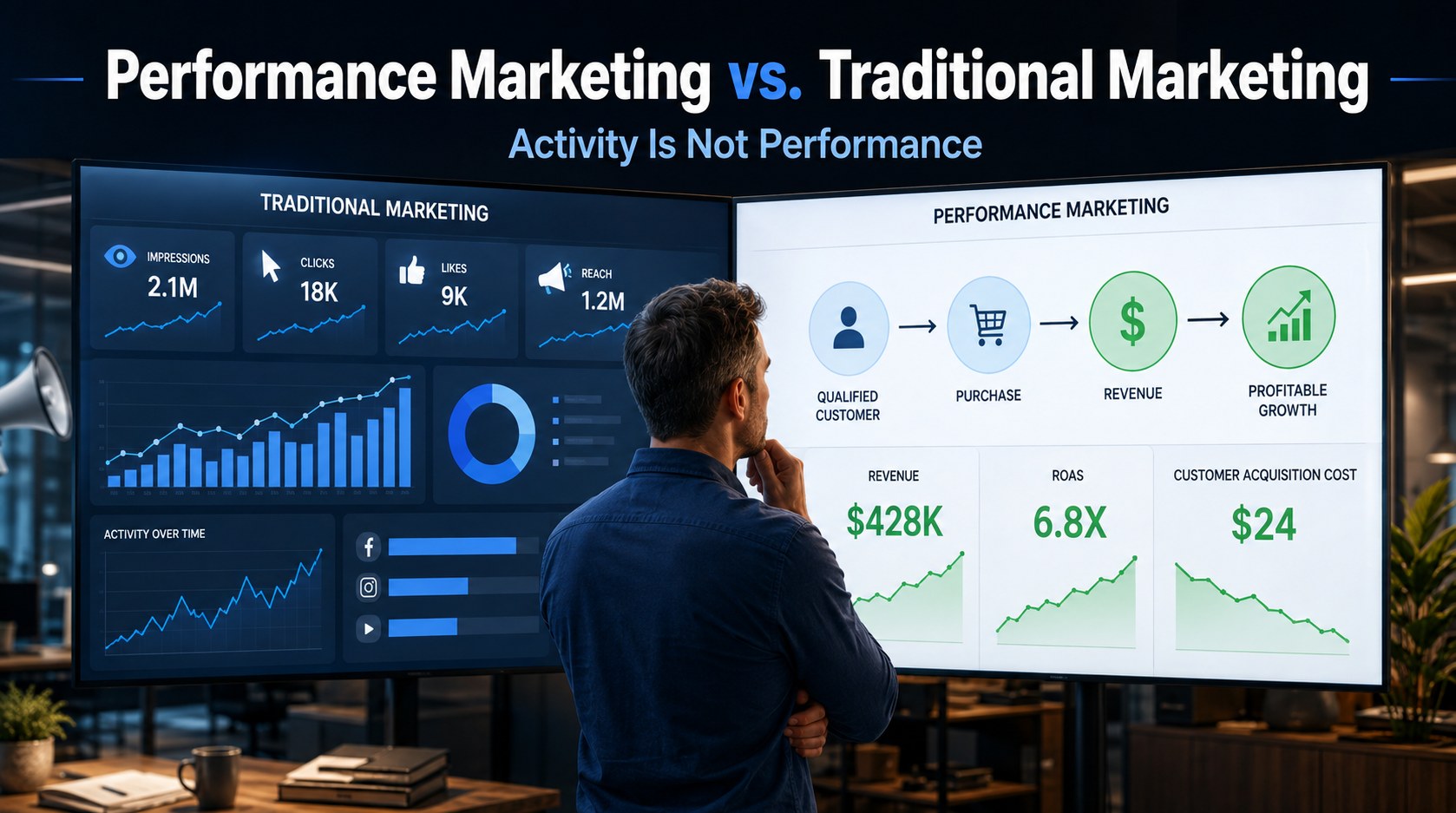
That is why attribution matters. Budget decisions should be based on qualified customers and revenue, not whichever channel happened to receive the last click.
Don’t Replace One Dependency With Another
Google is not the problem. Dependency is. Replacing complete reliance on Google with complete reliance on Facebook, geofencing, search engine optimization, or another tactic recreates the same vulnerability somewhere else. No platform guarantees affordable leads or predictable growth forever.
The objective is to build a measurable system that shows what is producing customers, identifies changes in performance early, and maintains other paths to the market. A durable diversified lead generation strategy rests on three things: multiple ways to reach qualified prospects, continuous monitoring across the complete customer journey, and attribution connecting marketing activity to customers and revenue.
Without diversification, the business is exposed to a single point of failure. Without monitoring, it may not recognize a problem until revenue has already declined. Without attribution, it cannot confidently determine what to improve, scale, reduce, or stop.
Google may remain one of the strongest tools available. When it produces qualified customers profitably, it deserves continued investment. But it should not be mistaken for a complete diversified lead generation strategy.
Because Google is great—until it isn’t. And the gap between the businesses that recover quickly and the ones that don’t is rarely luck. It’s whether a second path to the customer was already built before the first one stopped working. That is precisely what a diversified lead generation strategy provides.
Recent Posts


Ready to See Which Marketing Produces Customers?
Request a complimentary Revenue System Performance Assessment.
We’ll:
- Walk through how you’re currently attracting leads
- Highlight common gaps that impact conversion
- Give you the next step that will improve results fastest
No pitch. No pressure. Just clarity.